BLOG 10 – HOUSE/DANCE CONTINUED
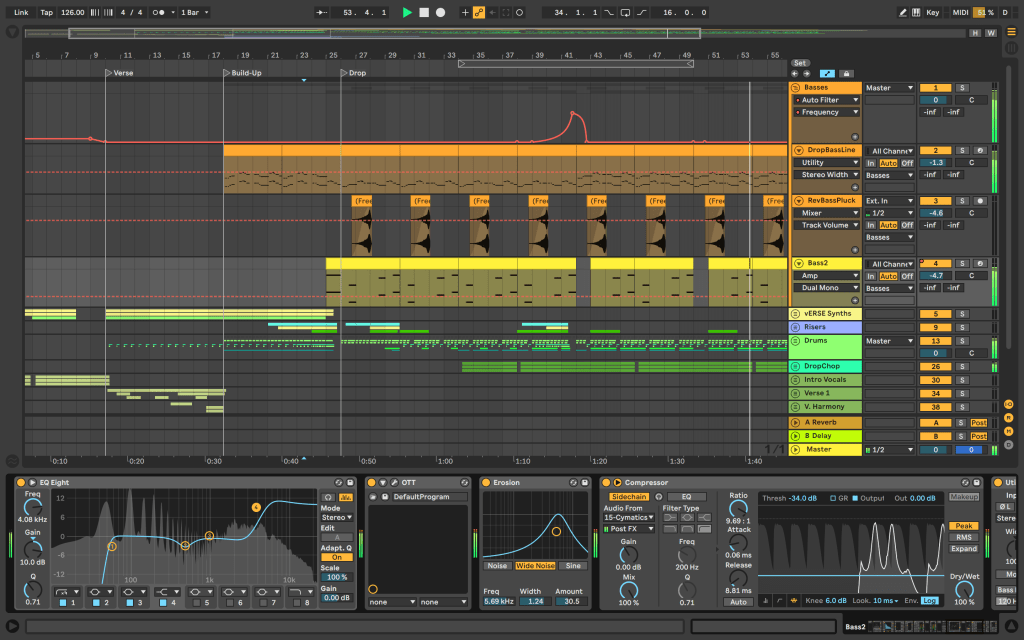
These videos and the screenshots in this blog demonstrate the progress of the house track in terms of editing and arrangement of the track. The first video shows the first initial ideas and how me and Connor started with a very simple sounding bass line and other instrumentation like the drums for this track.
We then developed this further, editing the bass to sound more fitted to the genre (see video).
BASS:
- The counter bass was created to respond to the more lead-like bass that holds the melody. This was formed to be dark, gritty, and heavily compressed in order to achieve a more modern sounding bass, particularly to fit within the genre of House/Dance.
- It is the same tone per chord i.e. on the Cm chord, however, programmed in 2 C notes an octave difference between, and so on following the scale.
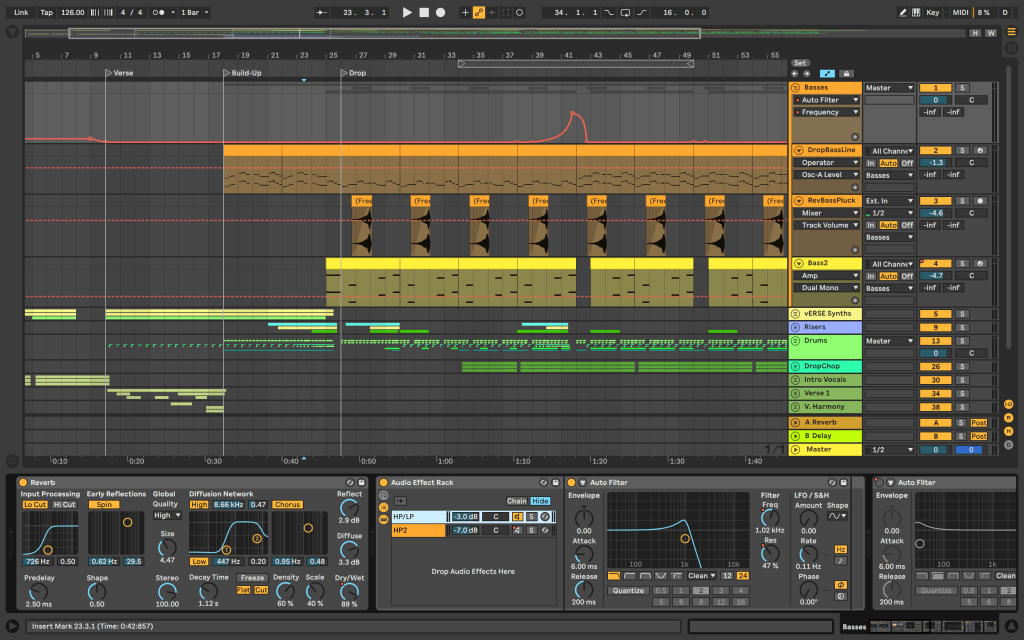
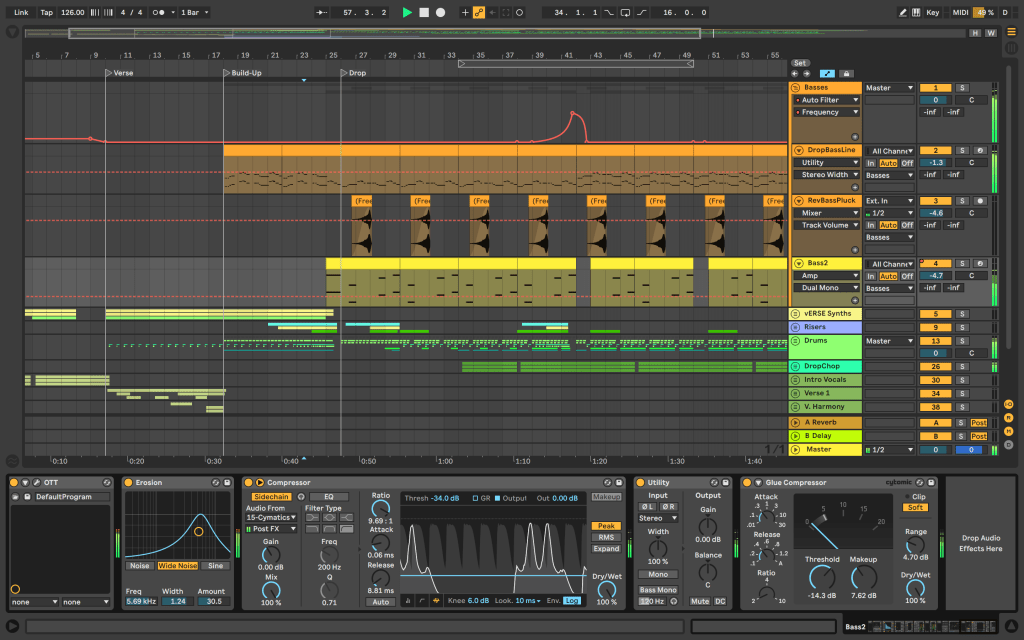
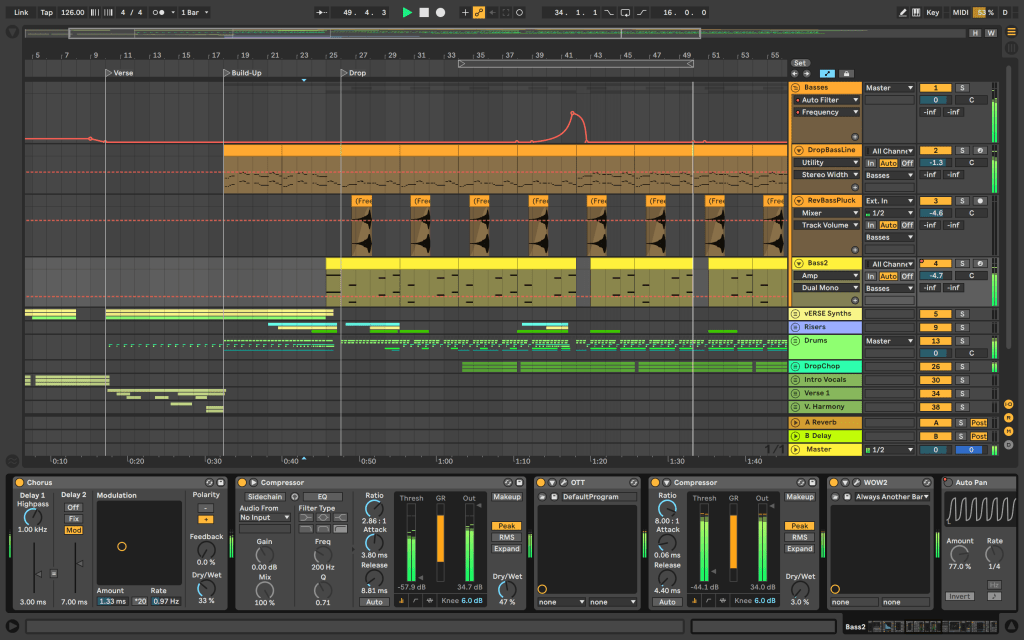
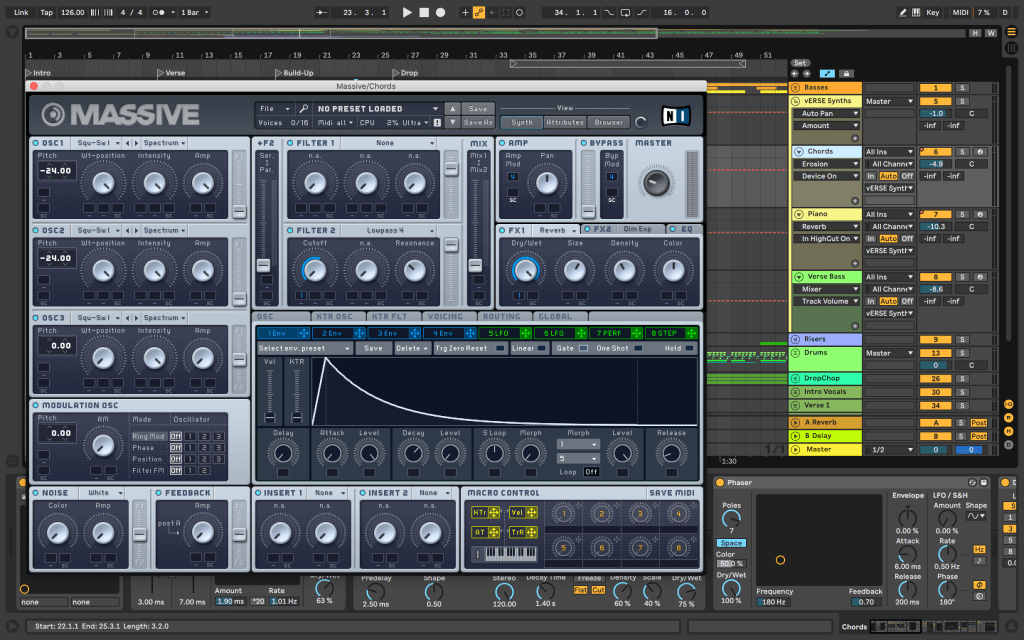
- Added simple detuned saw wave patch in the synthesiser ‘Massive’ by Native Instruments; layering this with a reese-style bass (from the same synth) – This helped to fill out the bottom end, and increase the body of the sound.
- EQ – boosted the low shelf, and cut out some more highs in order to tone back some of the fuzz from the bass.
- Processing this bass involved a lot of distortion and compression, followed by a phaser and chorus plugin, to add some movement and tonal quality to the bass – a staple for bass sound design.
- Used some more ‘multiband’ compression, as well as a filter/distortion plugin, WOW2, which squashed the sound, giving it a modern feel followed by some general additive and subtractive EQ.
- Width control and a touch of compression to create thickness the overall sound up.
DRUMS:
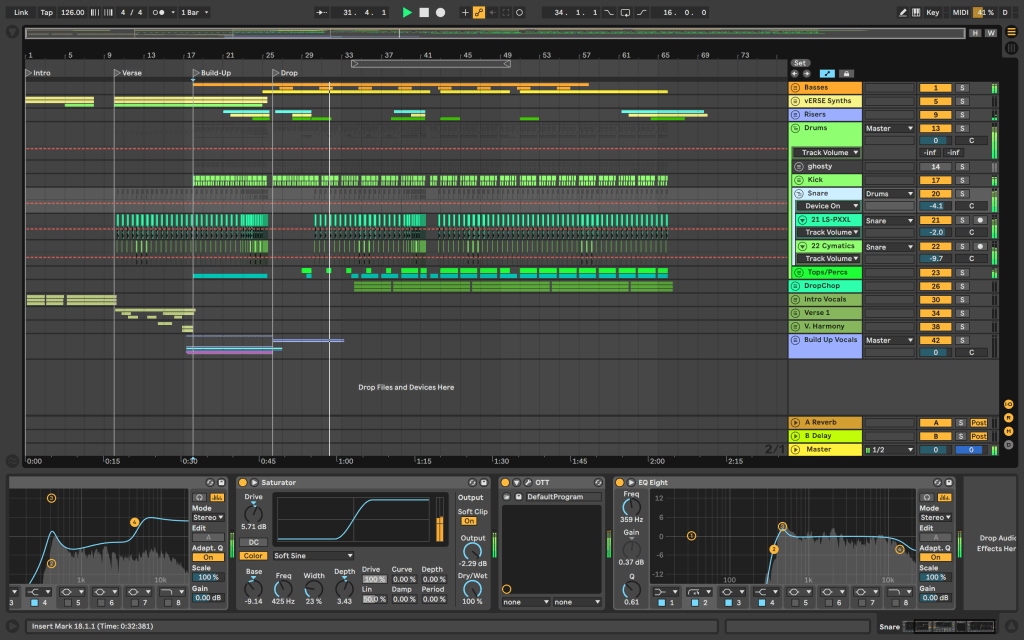
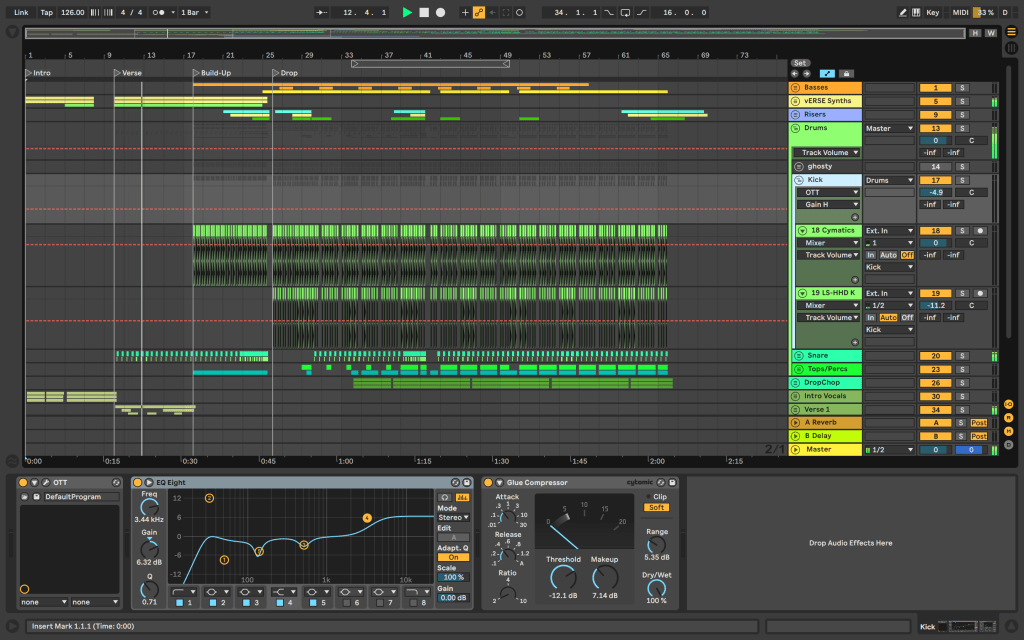
- Every 8-16 bars of drums (common in house tunes)
- Creates a sense of progression, and to an extent tension also, as you can sense the song leading somewhere.
- These contain a lot of high-end energy, and add a characteristic to the sound of the kick drum that makes it sound somewhat organic, as well as energised and fully fleshed out.
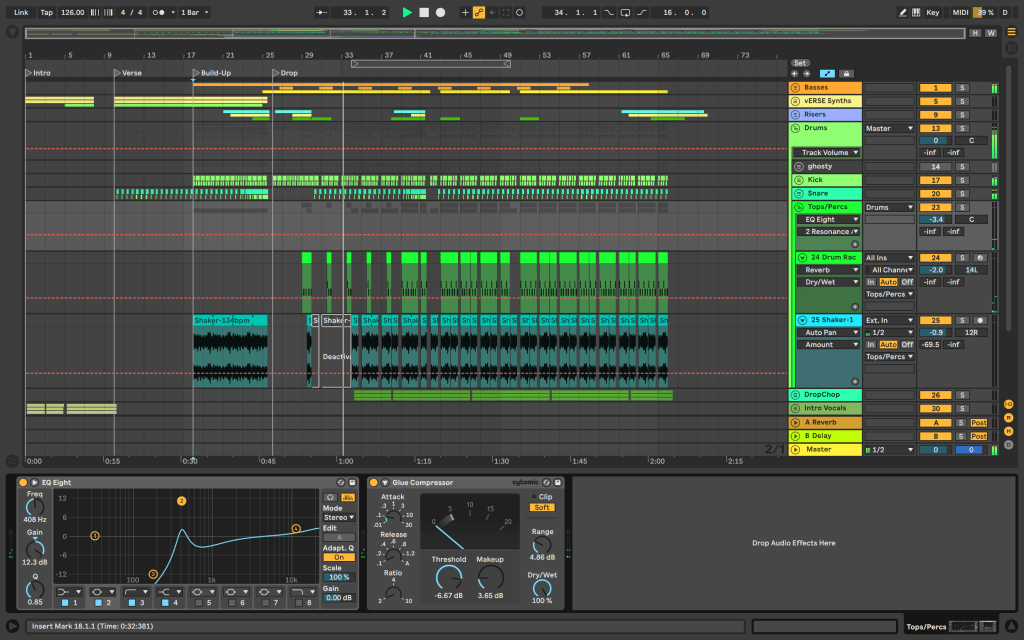
- For the top-end percussion, in this case the hi hat and shakers created to something more organic sounding.
- Carries rhythm, and is what characterises the ‘2-step’ or shuffle beat.
- Processing on these parts was minimal, save for automatic panning and delay on the shakers, as well as a touch of reverb on both channels.
VERSE SYNTH:
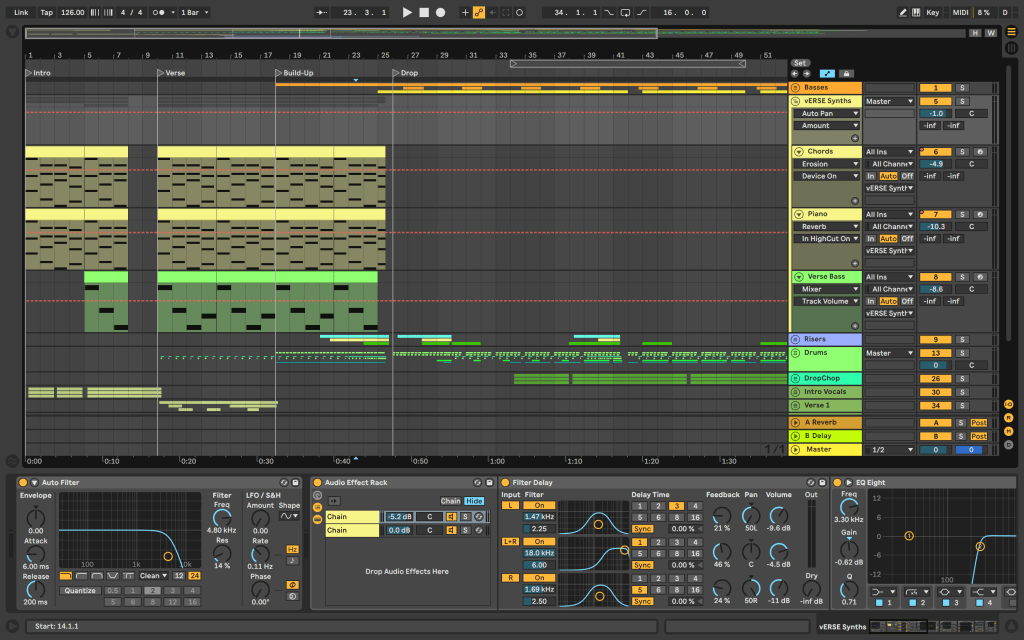
- Continued the same synth patches already used in the intro
- Opened up the bottom end slightly more, which is audibly noticeable as the song transitions.
CHORUS INSTRUMENTATION
- Created a lead, which carries the melody throughout this section.
- Operator, an FM synthesiser, with the 2 oscillators in use simply being pure-tone sine waves.
- After some distortion and processing – applied a plate reverb (taken from older techniques wherein one would play a sound that would reverberate between 2 small plates, close together).
- Giving it character and added much to the overall finished sound itself.
- EQ’d, compressed, added a side chain reverb to the sound to fill out the space (as well as some more reverse reverb throughout) followed by side chain compression to the kick and counter bass heard in the track.
What Next?
- Begin to write the lyrics and melodies for this track (Maybe create some acoustic version as a starting point)
- Continue to work and produce the other songs
- Continue to work with Alex on the EP cover – colours, fonts
 GEORGIA PAPANICOLA